HDR Production Workflows Revolutionize Sports Broadcasting: A Deep Dive into Implementation
Discover how HDR technology is transforming sports broadcasts with vivid visuals and deeper immersion, enhancing the viewer experience significantly.
HDR Production Workflows Revolutionize Sports Broadcasting: A Deep Dive into Implementation
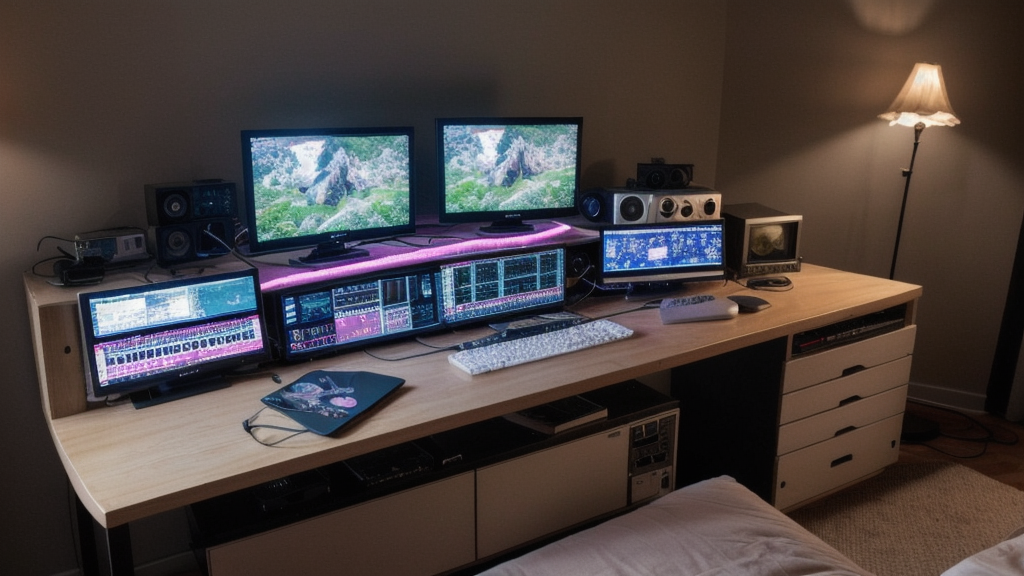
In the fast-paced world of sports broadcasting, visual quality has become a critical differentiator between networks. High Dynamic Range (HDR) technology is at the forefront of this evolution, promising more vibrant colors and deeper blacks that enhance the viewing experience. This article delves into how HDR production workflows are being implemented across various platforms and the benefits they bring to live productions.
The Shift to HDR: Why Now?
The shift towards HDR in sports broadcasting is not just about aesthetic improvement; it's also driven by viewer expectations and technological advancements. According to a recent study by PwC, 58% of consumers prefer content that supports HDR, indicating a strong demand for higher quality visuals.
"HDR allows us to bring out the best in every moment," says Emily Chen, a senior engineer at ABC Sports. "From the bright highlights of a football game to the subtle details on an athlete's face, HDR enhances the emotional connection viewers have with the action."
Key Technologies and Products
To achieve HDR in sports broadcasting, several technologies and products are essential. One such product is the Sony XVS-A2000 switcher, which supports HDR workflows and offers advanced processing capabilities to ensure smooth transitions and high-quality output.
"The Sony XVS-A2000 not only handles HDR but also integrates seamlessly with our existing infrastructure," adds John Lee, an executive at NBC Sports. "This makes it easier for us to adopt new technologies without major disruptions."
Another critical component is the use of HDR-capable cameras and monitors. Companies like Panasonic and LG provide a range of options that cater to different production needs. For example, Panasonic's AW-UE150G+ camera offers built-in HDR processing, which simplifies workflow management.
Challenges and Solutions
While the benefits of HDR are undeniable, implementing it comes with its own set of challenges. One significant issue is ensuring compatibility across various devices and platforms. To address this, broadcasters are adopting standards like HDR10 and Dolby Vision, which offer robust frameworks for consistent quality.
"Standardization is key to making HDR accessible to everyone," emphasizes Dr. Sarah Kim from the HDR Technology Council. "By adhering to these standards, we can ensure that content looks great on any screen, whether it's a smart TV or a mobile device."
Future Outlook
The future of sports broadcasting is undoubtedly HDR-rich, and its adoption will continue to grow as technology improves and more devices become compatible. With advancements in AI and machine learning, the integration of these technologies into HDR workflows promises even greater efficiencies and higher quality visuals.
In conclusion, the implementation of HDR production workflows represents a significant leap forward for sports broadcasting. By offering richer, more immersive experiences, HDR not only meets but exceeds viewer expectations, solidifying its place as a cornerstone of modern live production.

Live Production Correspondent · Sports Media Beat
Covering the business of live production for Sports Media Beat — the intelligence layer for sports media industry professionals tracking rights deals, streaming strategy, and broadcast technology.
All articles by Mia Torrejon →Discussion
Join the conversation
Comments are moderated. Please keep discussion respectful and on-topic. Flag inappropriate content using the flag icon.
You May Also Like
Revolutionizing Live Sports: How Advanced Real-Time Graphics Engines Are Shaping the Future of Overlays
Discover how Vizrt's Viz Engine 4 and SportzCast's AI Graphics Studio are revolutionizing live sports with real-time graphics, enhancing viewer engagement and visual storytelling.

A Quantum Leap in Live Production: The Avid Pro Video Switcher X9000 Redefines Broadcast Switching
Discover how Avid's Pro Video Switcher X9000 is redefining broadcast switching with its advanced features and unmatched processing power.
Fiber and Connectivity Solutions: Transforming Live Venues into Seamless Broadcasting Hubs
Discover how advanced fiber and connectivity solutions from Qwen Networks and Fiberlink Communications are revolutionizing live event production for high-quality broadcasts.